


Diversifying your blog content is crucial for engaging various audience segments and boosting your SEO performance. Many content writers stick to a single type of blog post, missing out on the benefits of varied content formats. Exploring different blog post types allows you to cater to diverse audience preferences and improve your website’s search engine ranking. But what kinds of blog posts should you consider? What are examples of blog posts?
In this article, we’ll explore ten different types of blog posts and show you how to use them effectively.
Types of Blog Posts
Let’s break down content types that you can use to improve website SEO performance.
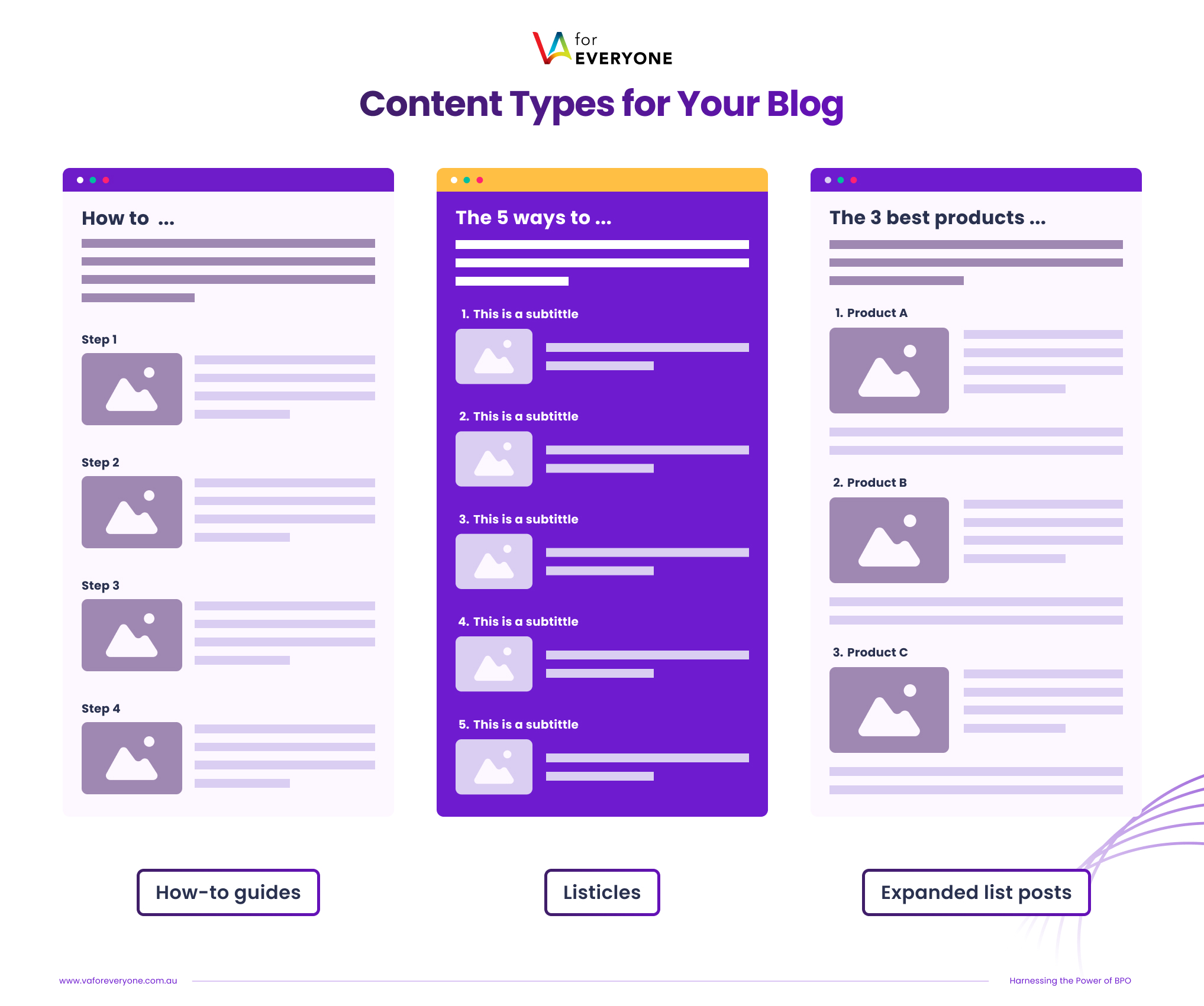
1. How-To Guides
Readers frequently search the internet for solutions to problems or instructions on completing tasks. Providing clear, comprehensive how-to guides can attract significant traffic to your website then blog post and demonstrate your expertise in the topic.
Structure suggestions:
- Introduction to the problem or goal: Tell the readers what they will achieve by following the guide.
- Step-by-step instructions: Break down the process into manageable steps.
- Detailed explanation for each step: Provide in-depth information, tips, and insights.
- Conclusion summarising the process: Recap the steps and reinforce the value of the solution provided.
You can elaborate on each section to guide your readers thoroughly. Additionally, including a video tutorial can visually enhance your guide, making it easier for readers to follow along.
Content Tips:
- Be as detailed as possible: Readers rely on your guide to learn to do something. Make sure each step is straightforward and comprehensive.
- Use visual aids: Tools, screenshots, and examples can significantly enhance understanding.
- Provide real-world examples: Practical illustrations can make abstract steps more concrete.
- Encourage engagement: Invite readers to ask questions or share their experiences in the comments.
Use these best practices to create highly effective how-to guides that attract readers and establish your authority on a certain topic.
2. Listicles (List Posts)
Listicles are types of blog posts that offer quick, actionable tips or insights in a list format. Unlike how-to guides, listicles are non-chronological, making it easy for readers to grasp essential information quickly. Each point in the list typically includes a brief explanation, allowing readers to understand the information efficiently.
Structure suggestions:
- Introduction to the list topic: Write a copy to explain what the list will cover and why it’s valuable.
- Numbered or bulleted points: Organise the content into a clear, easy-to-follow list.
- Brief explanations for each point: Provide concise descriptions or tips for each item on the list.
Content Tips:
- Avoid clickbait titles: Create straightforward, honest titles that accurately reflect the content of your post.
- Provide value: Ensure each point offers genuine insight or actionable advice.
- Be concise: Keep explanations brief and to the point to maintain reader engagement.
- Use visuals: Incorporate images to enhance readability and visual appeal.
If you want to catch readers’ attention and provide them with valuable content, consider using listicles as a blog post types.
3. Expanded List Posts
Expanded list posts are similar to listicles but provide more in-depth information for each item. This format is ideal for explaining complex topics, as it allows for detailed exploration of each point, making the content rich and comprehensive.
Structure suggestions:
- Introduction: Write a brief introduction to the topic, setting the context and explaining why it’s essential.
- Numbered or bulleted points with extensive details: Provide in-depth explanations for each item on the list, offering detailed insights and information.
- Subsections within each point: Break each point into subsections to enhance readability and provide a clear, organised flow of information.
Content Tips:
- Use subheadings (H3, H4): Incorporate subheadings to structure your content and make it easier for readers to navigate.
- Include images: Use visuals to summarise the text and support your explanations, enhancing overall readability.
- Be thorough: Ensure each point is covered comprehensively, providing valuable insights and actionable information.
- Maintain clarity: While detailed, keep your writing clear and concise to avoid overwhelming the reader.
Follow this guideline if you want to create engaging expanded list posts that thoroughly explore complex topics while remaining easy to read and understand. FYI, this blog post type is an example of an expanded list post.
4. Content Hubs
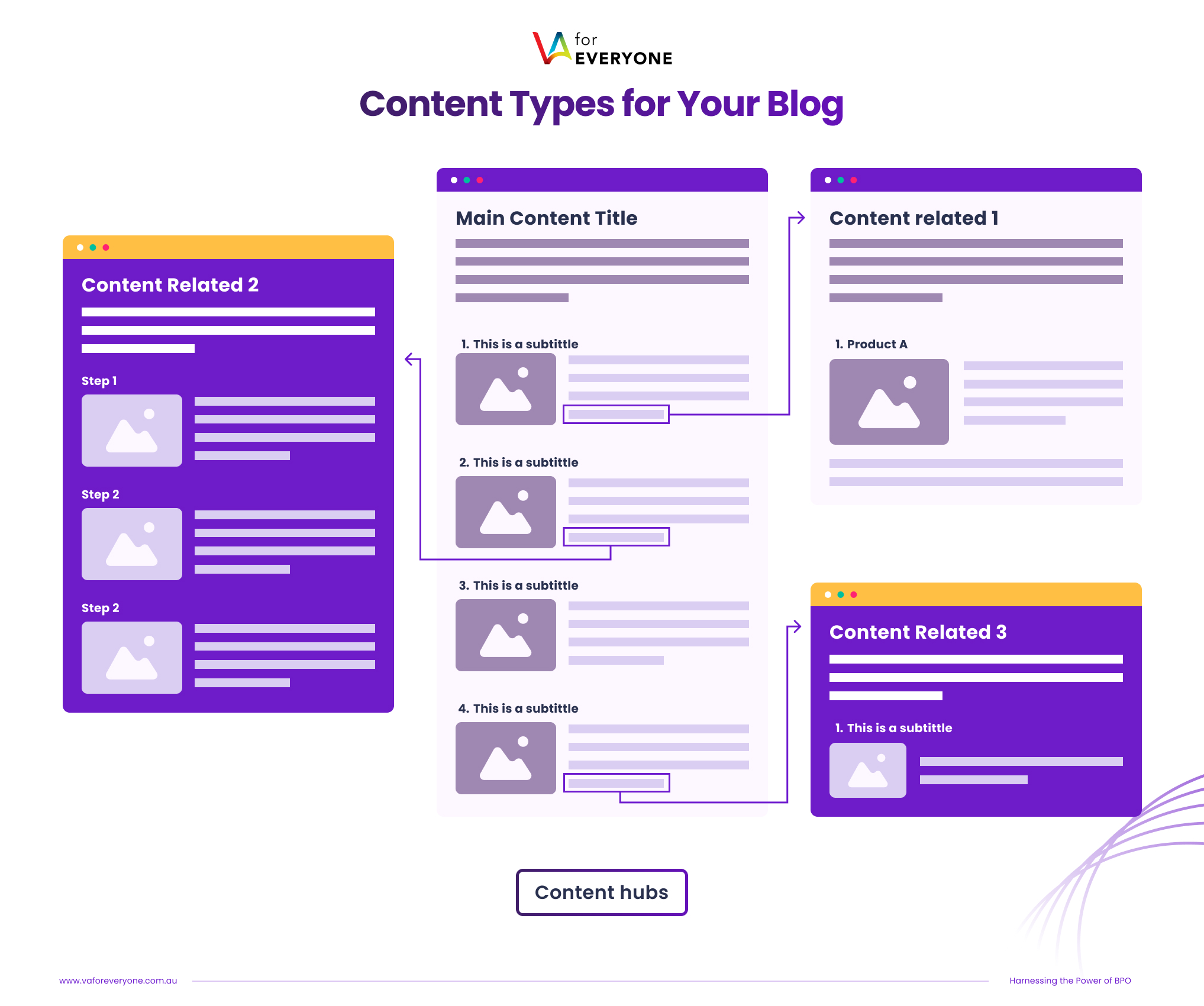
Another one from types of blog posts is content hubs. These blog post format are interlinked collections focused on a central topic, providing a comprehensive resource for readers. This blog post effectively links to other related content on the website, enhancing SEO and user experience.
Structure suggestions:
- Hub page: Start with an overview of the main topic and include links to subpages covering related subtopics.
- Subpages: Create detailed content for each subtopic, ensuring thorough coverage and valuable information.
- Hyperlinks: Connect the subpages and the hub page with strategic hyperlinks to facilitate easy navigation.
Content Tips:
- Plan the structure carefully: Use content mapping tools to organise the hub effectively, ensuring a logical and cohesive flow.
- Maintain consistency: Ensure all subpages are aligned in style and tone to provide a unified reading experience.
- Update regularly: Keep the content hub current by adding new subpages and updating existing ones with the latest information.
- Use straightforward navigation: Implement intuitive navigation to help readers quickly find and access the needed content.
When you create well-organised and interlinked content hubs, you can provide your audience with valuable, comprehensive good blog post that keep them engaged and informed.
5. Expanded Definition Posts
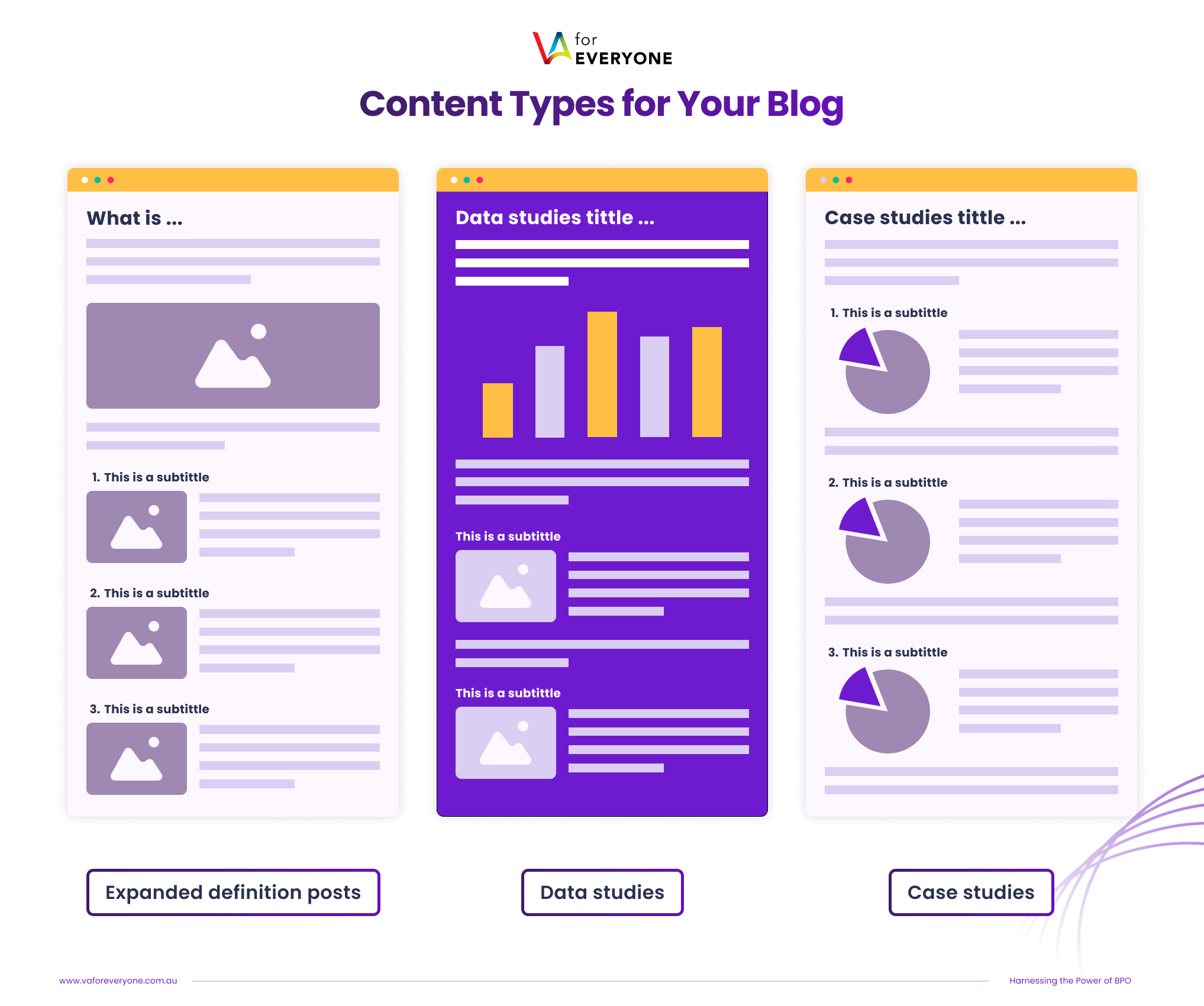
Expanded definition posts go deeply into a concept, offering a thorough explanation before providing actionable advice. These posts typically begin with “what is/what are” questions and follow up with detailed answers and practical steps. How to posts this kind of blog post? Check below.
Structure suggestions:
- Introduction with a table of contents: Provide a brief overview of what the post will cover and include a table of contents for easy navigation.
- Explanation of the concept: Define the idea in depth, offering a comprehensive understanding.
- Importance and benefits: Highlight why the concept is significant and outline its benefits.
- Actionable steps based on the concept: Provide practical advice on how to apply the concept in real-world scenarios.
Content Tips:
- Use the Problem-Agitate-Solve (PAS) formula: Start by identifying a problem, agitate by explaining its impact, and then offer a solution through the concept.
- Engage the reader: Use relatable examples and real-life applications to make the concept more understandable.
- Break up the text: Use subheadings, bullet points, and images to enhance readability and keep the reader engaged.
- Be thorough yet concise: Ensure the explanation is detailed enough to be informative but concise enough to maintain the reader’s interest.
When you follow these best practices, you can create expanded definition posts as one of your blog post ideas that are both informative and engaging. Thus, you can help your readers gain a deep understanding of complex concepts and how to apply them.
6. Data Studies
Data studies blog post format provide research-driven content that presents findings and insights from data analysis. While creating this type of content requires significant research and writing time, it offers readers valuable insights. It is an excellent way to earn backlinks. Also, you can add infographic post to this blog post.
Structure suggestions:
- Introduction of the study’s relevance: Explain why it is essential and how it addresses a current issue or fills a knowledge gap.
- Methodology: Describe the methods used to collect and analyse the data, ensuring transparency and credibility.
- Presentation of data: Use charts, graphs, and other visual aids to present the data clearly and effectively.
- Insights and conclusions: Summarise the essential findings and their implications, offering actionable insights based on the data.
Content Tips:
- Use reliable data sources: To maintain the integrity of your study, ensure the data is accurate and comes from credible sources.
- Create visual aids: Use charts, graphs, and infographics to make complex data more digestible and engaging.
- Be transparent: Clearly explain your methodology and any study limitations to build trust with your readers.
- Offer actionable insights: Provide practical recommendations based on your findings to help readers apply the information.
If you want to provide valuable insights and establish your authority in your field, consider writing data studies on your blog.
7. Case Studies
Case studies highlight real-life examples of successful strategies or problem-solving, showcasing your expertise in action in blog post format. Rather than just telling your audience that you excel at what you do, case studies provide concrete evidence of your capabilities. This blog post is particularly effective for attracting potential customers, as they can see firsthand how you solve problems with your expertise.
Structure suggestions:
- Introduction to the subject: Provide an overview of the case study, introducing the main topic and its relevance.
- Background information: Offer context about the client or situation, including their challenges.
- Detailed explanation of strategies used: Describe the strategies and actions to address the challenges.
- Results achieved: Present the outcomes and benefits of your solution to their problems.
- Key takeaways: Highlight the lessons learned and actionable insights that readers can apply to their situations.
Content Tips:
- Focus on precise, actionable results: Emphasise measurable outcomes and the positive impact of your strategies.
- Provide detailed insights: Offer in-depth explanations of your approaches and methodologies.
- Use visuals: Include charts, graphs, and before-after images to illustrate the results and make the content more engaging.
- Highlight client testimonials: Include quotes or feedback from clients to add credibility and authenticity.
You can start creating compelling case studies that demonstrate your expertise and inspire and inform your audience. Creating new blog post to talk about case study posts tend to attract people to know more about your business.
8. Cheat Sheets and Checklists
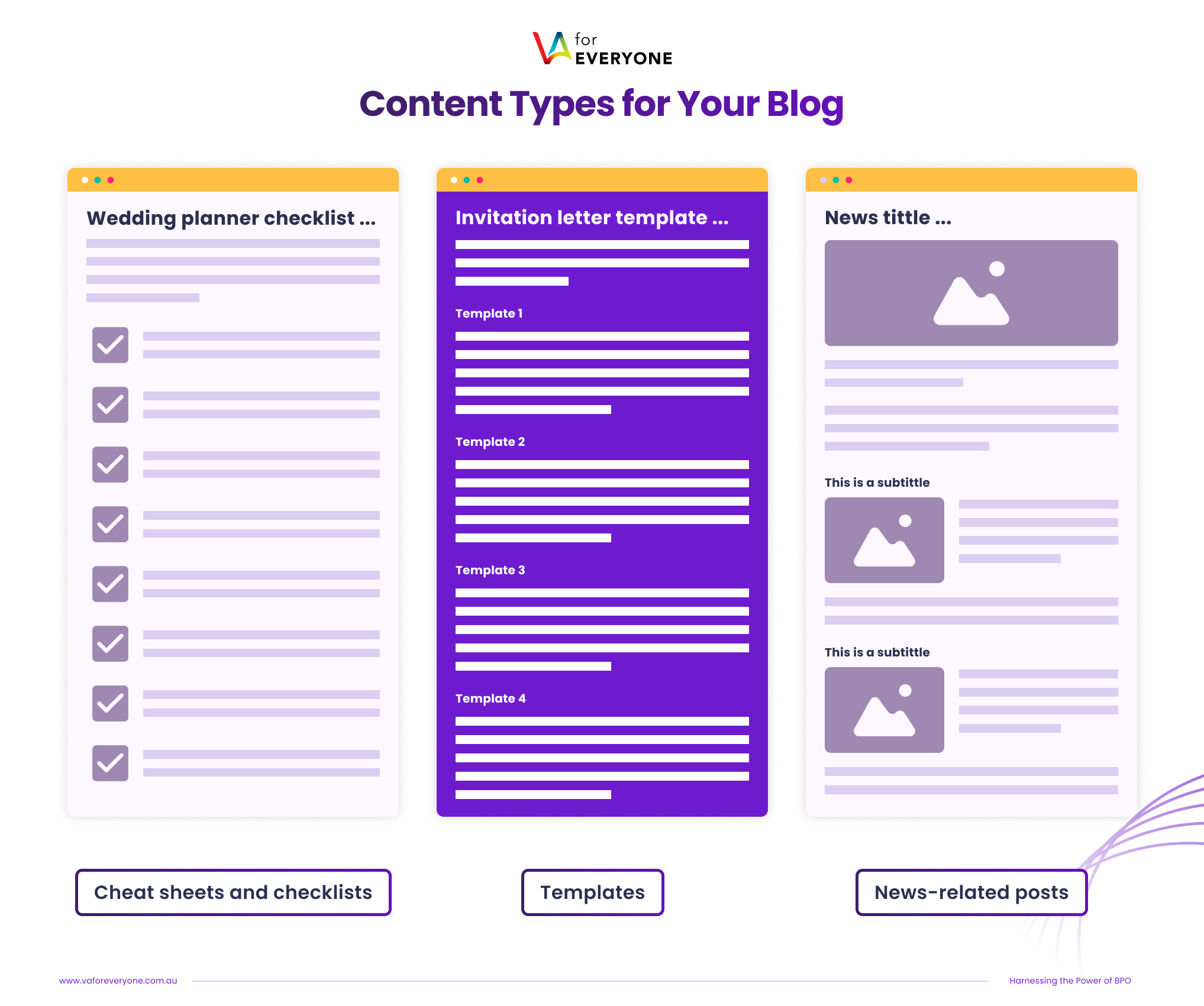
Cheat sheets and checklists are powerful tools that provide readers with concise, actionable steps to achieve a specific goal. Unlike how-to guides, these types of blog posts typically present the steps without extensive explanations, making them quick and easy to follow. This blog posts tend to perfect for busy readers who need straightforward guidance.
Structure suggestions:
- Introduction to the topic: Briefly explain the purpose of the checklist or cheat sheet and its relevance to the reader.
- Step-by-step checklist or cheat sheet: Present the steps clearly and organised.
- Explanation for each point: Add brief explanations or tips where additional context might be helpful.
Content Tips:
- Ensure it’s easy to follow: Use simple language and avoid jargon to make the steps accessible to everyone.
- Organise steps chronologically if applicable: Arrange the steps logically to guide the reader smoothly through the process.
- Use visual aids: Incorporate icons, numbers, or bullet points to enhance readability and usability.
- Keep it concise: Focus on the essential steps to avoid overwhelming the reader.
When you offer your audience a cheat sheet or checklist, they can quickly implement it and enhance their productivity. They might want similar content. Try these new blog posts type to give your blog readers engaged and interested in your business.
9. Templates
Templates offer ready-to-use frameworks that help readers accomplish various tasks efficiently. These types of blog posts provide practical tools that readers can directly implement, showcasing your expertise and making their lives easier.
Structure suggestions:
- Introduction: Briefly introduce the template and its purpose. Explain how it can simplify a specific task or process.
- Explanation of the template’s use: Provide clear instructions on how to use the template effectively.
- Sample template: Share a downloadable or easily replicable template readers can utilise.
- Tips for customisation: Offer tips on how readers can customise the template to fit their unique needs and preferences.
Content Tips:
- Keep templates simple and adaptable: Ensure that your templates are easy to use and can be tailored to various scenarios.
- Provide clear instructions: Ensure the usage instructions are easy to follow.
- Add value with customisation tips: Suggest ways to personalise your templates to help readers get the most out of them.
- Use visuals: Incorporate screenshots or examples to illustrate how the template works.
If you provide templates for your audience, you provide them with valuable tools that save time and effort, enhance their productivity, and cement your authority in your niche. Try this blog ideas to get more readers.
10. News-Related Posts
Your readers crave up-to-date information about what’s happening in your industry. You demonstrate your expertise and authority by sharing news-related posts, positioning yourself as a go-to source for the latest industry trends and developments. This type of content keeps your audience engaged and builds trust in your brand.
Structure suggestions:
- Summarising the news: Start with a brief overview of the news event to capture your readers’ attention.
- Details of the news event: Provide in-depth information, ensuring readers understand the context.
- Analysis of its relevance and impact on the audience: Explain how this news affects your audience and what it means for the industry.
Content Tips:
- Use the inverted pyramid structure: Present the most critical information at the top, followed by supporting details.
- Be timely and relevant: Ensure your news posts are current and directly related to your audience’s interests.
- Provide expert analysis: Offer insights and opinions to help your readers understand the significance of the news.
- Engage with visuals: Include images, charts, or videos to make your post more engaging and informative.
To make your business an industry leader, try including news-related posts in your content and keeping your audience informed and engaged.
Researching content ideas, keywords, and topics can be time-consuming and overwhelming. Deciding which blog posts to write can eat into your productive hours. Why not focus on growing your business and leave the content creation to us? At VA For Everyone, our expert virtual assistants will handle the entire content creation process, ensuring each piece perfectly fits your niche and industry. Book a free consultation now and discover how we can elevate your content strategy!
FAQs
What type of blog is most popular?
The most popular types of blogs often cater to widespread interests and needs. These include:
- Lifestyle Blogs: Covering topics like fashion, travel, food, and personal experiences.
- Health and Fitness Blogs: Focus on wellness, exercise, nutrition, and mental health.
- Personal Finance Blogs: Offering advice on saving, investing, budgeting, and financial planning.
- Technology Blogs: Discussing the latest in tech, gadgets, software, and industry trends.
- DIY and Craft Blogs: Providing tutorials, project ideas, and crafting inspiration.
Which type of content is best for blogging?
The best content for blogging depends on your audience and niche. However, some universally effective content types include:
- How-To Guides: Step-by-step instructions that solve specific problems.
- Listicles: Easy-to-read lists that provide value and quick insights.
- Case Studies: In-depth looks at real-world applications and success stories.
- Product Reviews: Detailed evaluations of products and services.
- Interviews: Conversations with experts in your field.
How do I know what blog posts to write?
To determine what blog posts to write:
- Know Your Audience: Understand their interests, pain points, and needs.
- Keyword Research: Use tool like Google Keyword Planner to find popular search terms in your niche.
- Competitor Analysis: Look at what similar blogs are writing about and identify gaps or opportunities.
- Audience Feedback: Pay attention to comments, emails, and social media interactions to gauge what topics resonate.
- Trends and News: Stay updated with industry trends and news to create timely and relevant content.
What categories should I use for my blog?
Your blog categories should reflect the main topics you cover and help organise your content. Some general category suggestions include:
- How-To Guides
- Product Reviews
- Industry News
- Case Studies
- Opinion Pieces
- Interviews
- Tips and Tricks
Tailor these categories to your specific niche and audience interests.
What are the 4 pillars of blogging?
The four pillars of blogging are essential components that help build a successful blog:
- Content Quality: Provide valuable, well-researched, and engaging content that meets your audience’s needs.
- SEO (Search Engine Optimisation): Optimise your blog posts for search engines to increase visibility and attract organic traffic.
- Promotion: Actively promote your blog through social media, email newsletters, guest posting, and other channels to reach a wider audience.
- Consistency: Maintain a regular posting schedule to keep your audience engaged and coming back for more.


